Field Notes
Writings from the Scalar Flower project — the instrument, the geometry, and the craft of reading a chart as a field. We keep the waterline visible throughout: what is proven, what is premise, and what is contemplative craft.
What a Reading Actually Feels Like — the Wow, the “Huh?”, and What We Did About It
No jargon. What a reading really is, the honest range of how people react — from “it gave me the feeling of being seen” to “most of it was Greek to me” — and the concrete changes we shipped when the hard feedback came in. The reactions are real reader words, shared anonymously.
Read the Field Note →
Beyond the Opposition — What 40 Years of Traditional Astrology Couldn’t See
Oppositions, conventional aspects, and a higher-order way of reading the same chart. Five famous charts — da Vinci, Mandela, Bowie, Marley, Tesla — read twice, once on the wheel and once as a field. Where the two readings part company, the disagreement is the finding. The aspect count and the field structure are not the same thing, and forty years of practice taught me the first one without ever showing me the second.
Read the Field Note →
Nine Lives the Instrument Read Right — and Why It Still Failed the Test
We ran a pre-registered experiment on thirty world-historical figures to see if a birth-field could predict character. Across all thirty it came back null — and we publish that plainly. Yet for nine of them, a computed field-number and a blind stranger’s read landed almost exactly on top of each other, in both directions. Includes a head-to-head against conventional astrology on the same charts — and why the failure is the trustworthy part.
Read the Field Note →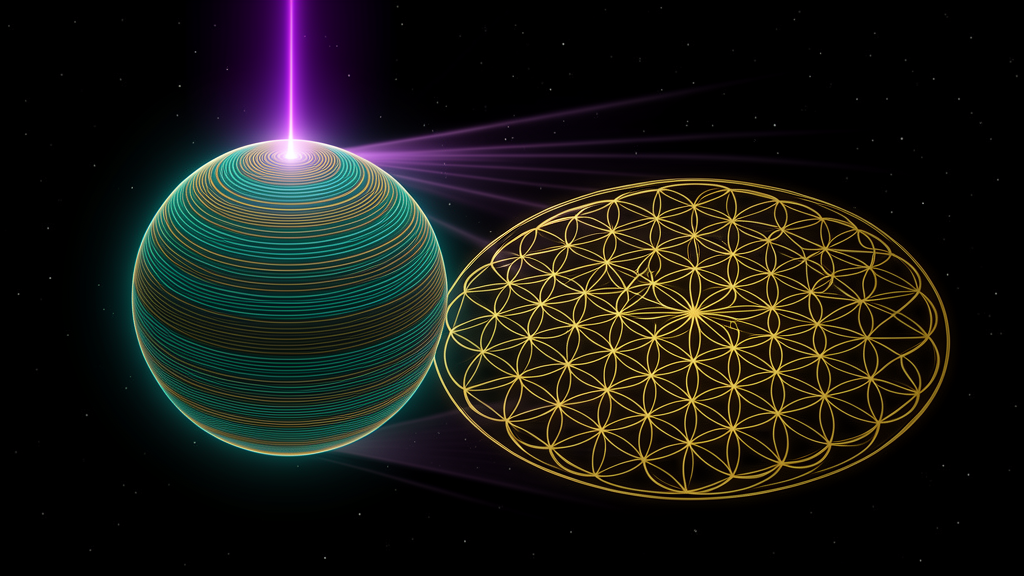
The Conformal Vortex
The birth field lives on a sphere. Flatten it with the oldest honest map in mathematics — stereographic projection — and the sphere lies down as a flat Flower of Life, losing not one angle and not one whirlpool. The circles staying perfectly round is the proof the map is honest, and the sphere and the flower turn out to be one object seen two ways. Comes with a viewer you can turn in your hands: drag the sphere flat, switch between charts, and watch a one-voiced field and a two-centered one show their difference.
Read the Field Note →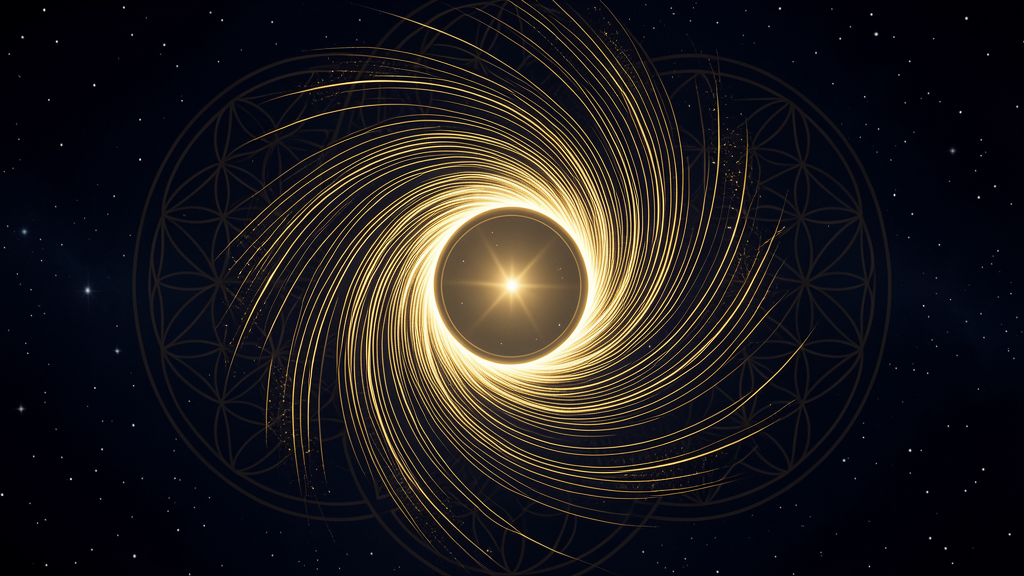
Mercury Retrograde: Disproved in 200 Million Flights — With a Literal Twist
We aimed the tradition’s most famous claim at the U.S. flight database — 324 months, ~200 million flights — and it left no trace: median −1.18 min, p = 0.83, a clean null with the positive control firing and four shams empty. Then the twist, literally: retrograde does leave a mark, not on your travel but on the geometry of your birth field, winding it tighter around its own center. The measured deepening and the tradition’s one honest instruction — go within — turn out to be the same gesture. The null buys the credibility; the vortex is the surprise.
Read the Field Note →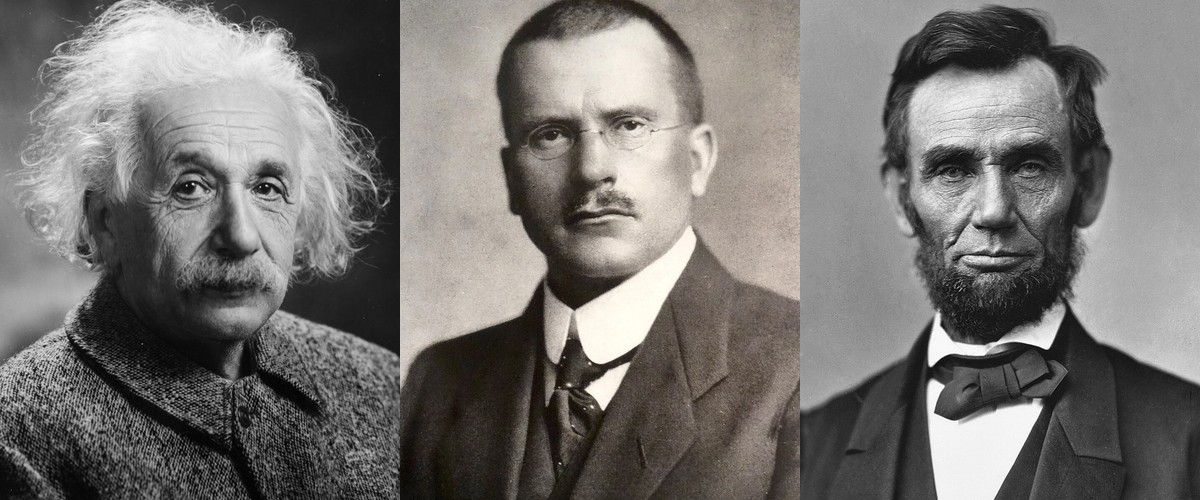
Three for Three
Einstein, Jung, and Lincoln — run through the instrument with no biography attached, geometry only. Three times the field's own synthesis landed on the exact, well-documented shape of that person's real life: Einstein's structure and disagreement, Jung's depths, Lincoln's buried feeling. In two of the three, two independently-computed parts of the math singled out the same planet. Not a proven rate yet — but a real, stated-plainly result, with the receipts shown.
Read the Field Note →
The Same Sky, Twice
The Maya, Aztec, and Inca built their cosmos on four points around a center. A page of modern equations, borrowing nothing from them, found the same shape — the Inca even built a physical version, a temple hub with lines radiating like spokes. A real echo across millennia. But they organized it the sloppy way the model corrects, leaned on where-you-stand, and claimed the sky decides your fate — a claim tested six times, to null. The rhyme is real; the restraint is what makes it credible.
Read the Field Note →
The Field Has a Grain
Every reading points somewhere. We asked whether that direction is real structure or an accident of where the planets sit — then tried to explain it away with the most boring answer available, and failed. Five thousand moments pile up where chance says they shouldn’t; scramble the planets’ relationships and the pattern vanishes, so it lives in the relationships, not the positions; and Neptune carries almost all of it while Uranus — busiest-looking of all — carries none. We proved the field has a grain. We did not prove what the grain means.
Read the Field Note →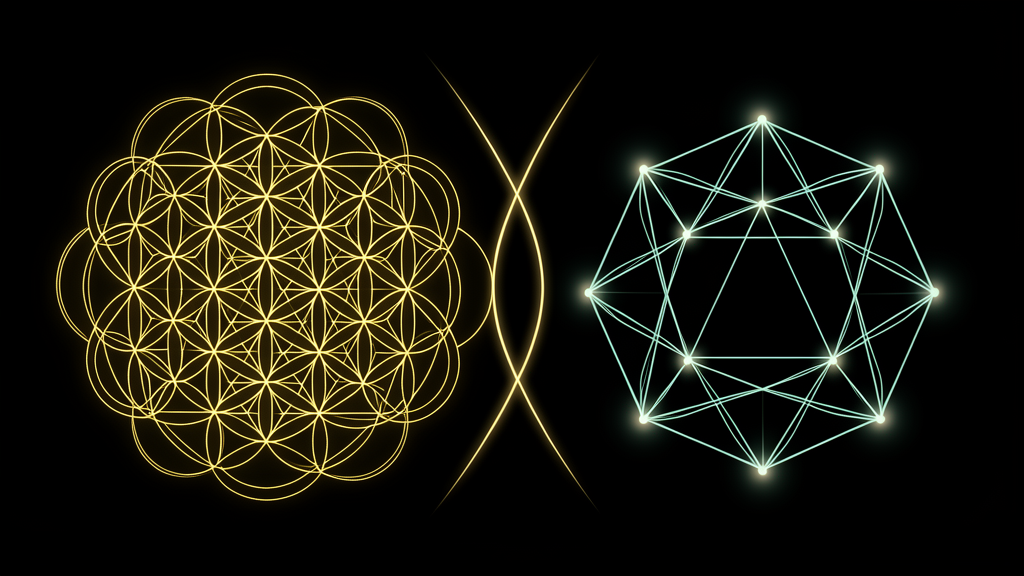
Haramein and the Scalar Flower
Nassim Haramein and I arrived, decades and disciplines apart, at the same phrase — “scalar flower” — for the geometry of reality. His comes from vacuum physics and sacred-geometry cosmology: the isotropic, sphere-packed geometry of spacetime itself, quantified in his 2013 holographic-mass paper. Mine comes from circular statistics on birth charts: a chart's minimal set of rotation-invariant scalars. This note traces his work chronologically back to its earliest published references, gives him clear priority on the name and the architectural intuition, and draws the honest line — his is an ontological claim about the vacuum; mine is a methodological reduction that has tested and rejected the literal physical-wave reading. Two different objects, one shared name, credit where it's due.
Read the Field Note →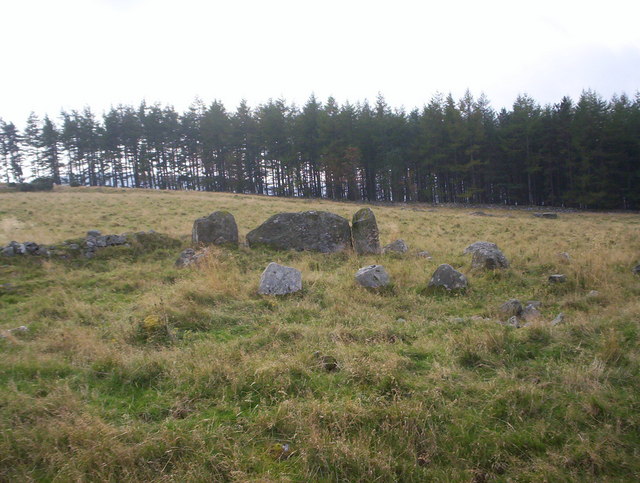
The Standstill and the Soul's Long Breath
A mythopoetic essay on Test 43, the lunar nodes, and the geometry of entering and leaving. Thirty-seven Scottish stone circles point not at the obvious sun but at the moon's rarest extreme — the southern major standstill, 0.37° off, too far south for the sun to ever set. That extreme is caused by the 18.6-year regression of the lunar nodes: the exact axis the Vedic tradition reads as the karmic wheel of the soul's entering and leaving, and the exact axis the Scalar Flower is built on. The measured half is falsifiable and confirmed; the meant half is offered openly, never borrowing the mathematics' credibility. The moon has always been the door.
Read the Field Note →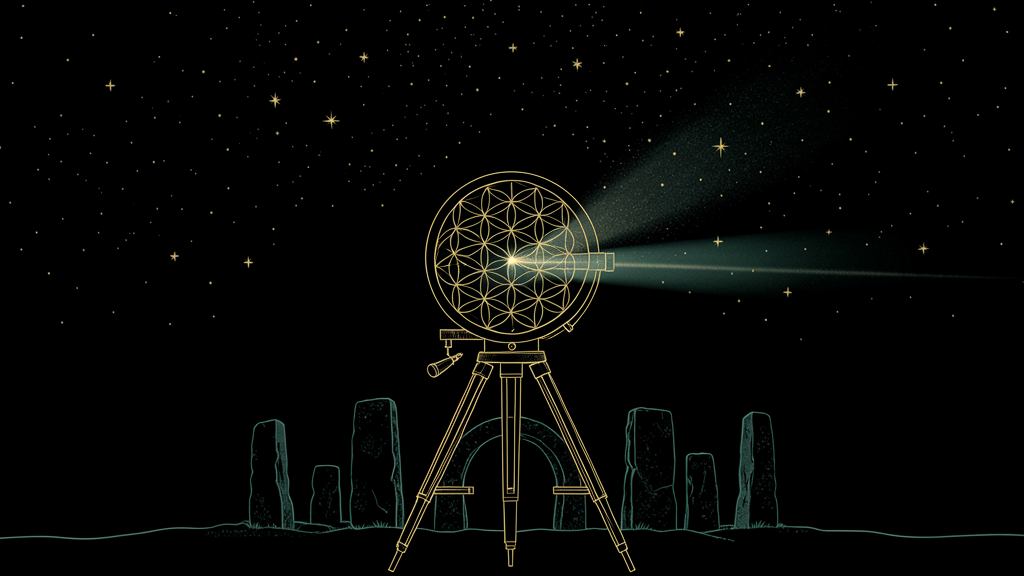
The Instrument That Catches Itself
Fifteen pre-registered tests of the sky, from Newgrange to Malta. We built a minimal positional-astronomy engine, forced it to declare its verdict before it looked, and pointed it at archaeoastronomy's most famous claims. It confirmed the sound alignments to arcminute precision (Göbekli 1.4′, Serpent Mound 0.04°), refuted the numerology (Regulus, the Megalithic Yard), and adjudicated three monument populations that disagree with each other — Moon, Sun, and Stars. It caught its own mistakes five separate times, including a dropped-sign error that would have inverted the Malta verdict. And on the claim closest to its own heart — that the sky means something about a human life — it returned a clean null. The catch is the credibility. Full method in the linked white paper.
Read the Field Note →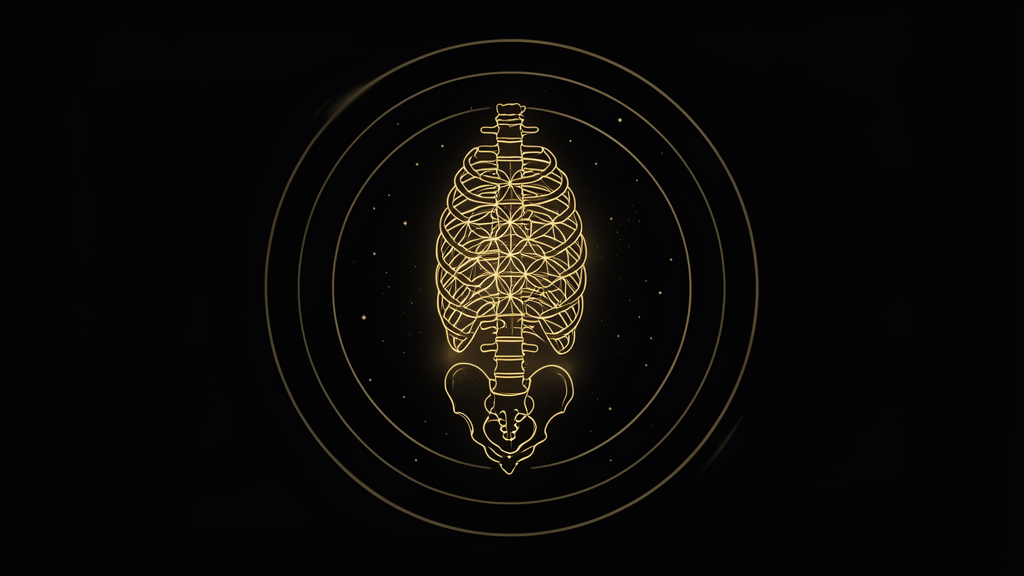
We Tried to Break Our Own Skeleton
A careful reader made the sharpest objection anyone has made to the last note: the field is arbitrary — you chose ten bodies, equal weights, a sum. So we ran the critique against our own engine, in public. The invariance held to fifteen decimal places, an algebraic identity rather than a lucky fact. The modeling choices bent exactly where they should — and the chart ranking survived every defensible one, collapsing only when raw-mass weighting deletes every body but the Sun. And the breath proved, at r = −0.03 across five thousand charts, that it is genuinely not the tradition's out-of-bounds. The one real crack was in our prose, not our bones. The scripts are linked; run them yourself.
Read the Field Note →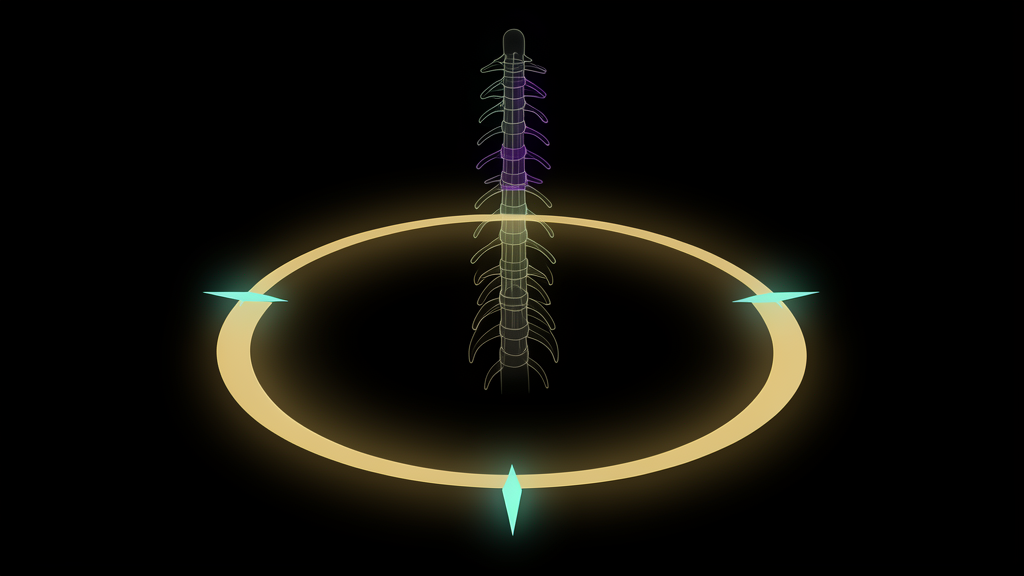
The Skeleton Under the Signs
The oldest objection to this instrument is that it discards signs and houses. It doesn't — and this is the honest map of what's really underneath them. A small theorem shows the signs are a naming-frame that cannot move a single number we measure. Beneath that name-layer sits a real Earth-built skeleton: a fourfold cardinal cross that falls straight out of the planet's 23.44° tilt, and a twelvefold that is simply the smallest wheel able to hold polarity, modality, and element at once — the harmonic structure John Addey mapped fifty years ago. Plus one genuinely new bone: the breath, the vertical dimension the flat chart always threw away.
Read the Field Note →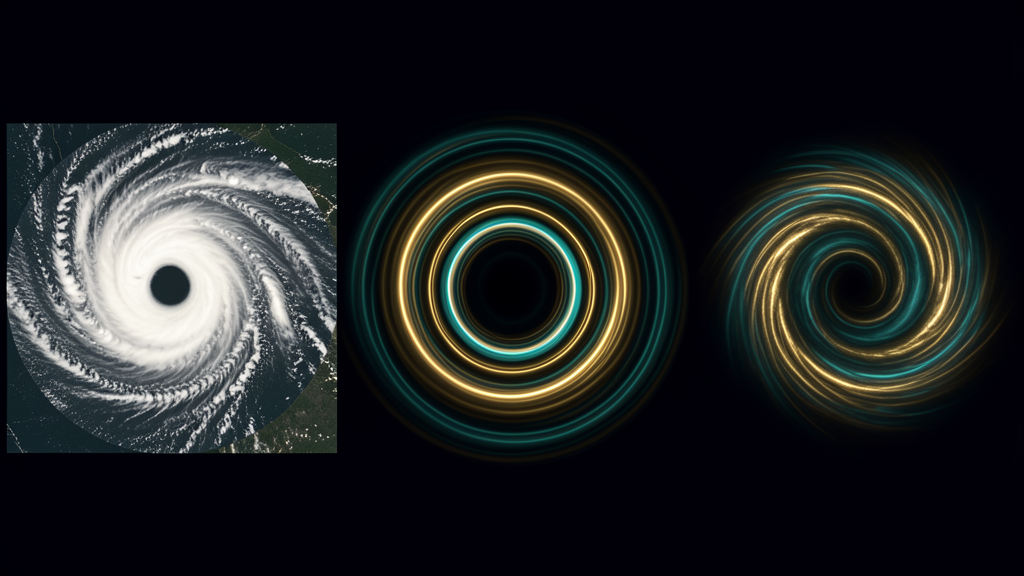
The Universal Whirlpool
The whirlpools in your field are not a quirk of our model — they are instances of the single most universal structure in wave physics, the phase singularity, discovered independently in laser light (Nye & Berry), in hurricanes (potential vorticity), and in superfluid helium, all obeying the same balance-to-zero conservation law. The same interferometry that builds the field is how physicists find vortices in real light. Same topology, different substrates — and that universality is the honest answer to "isn't it just an artifact?"
Read the Field Note →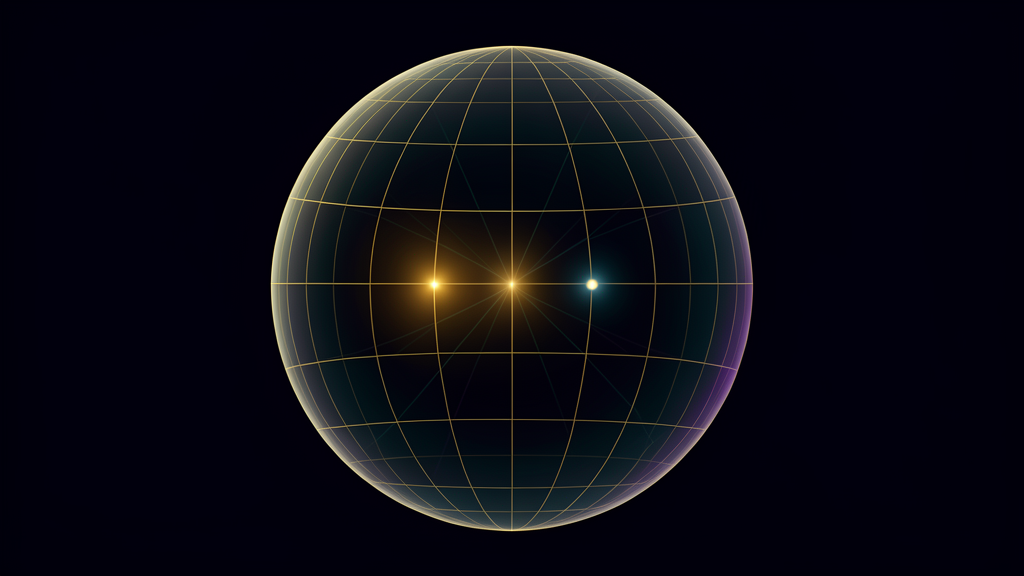
The Conformal Soul
The sharpest objection to the model — that the giant Sun and the tiny Mercury enter the field as equals — turns out to be its clearest foundation. What survives when you strip away size, mass, and distance and keep only angle: a relational, conformal picture of the self, the same choice a Mercator map makes and the same one the deepest physics makes. Ends, across the waterline, on materiality as a shadow of a higher-dimensional relational structure — offered, not proven.
Read the Field Note →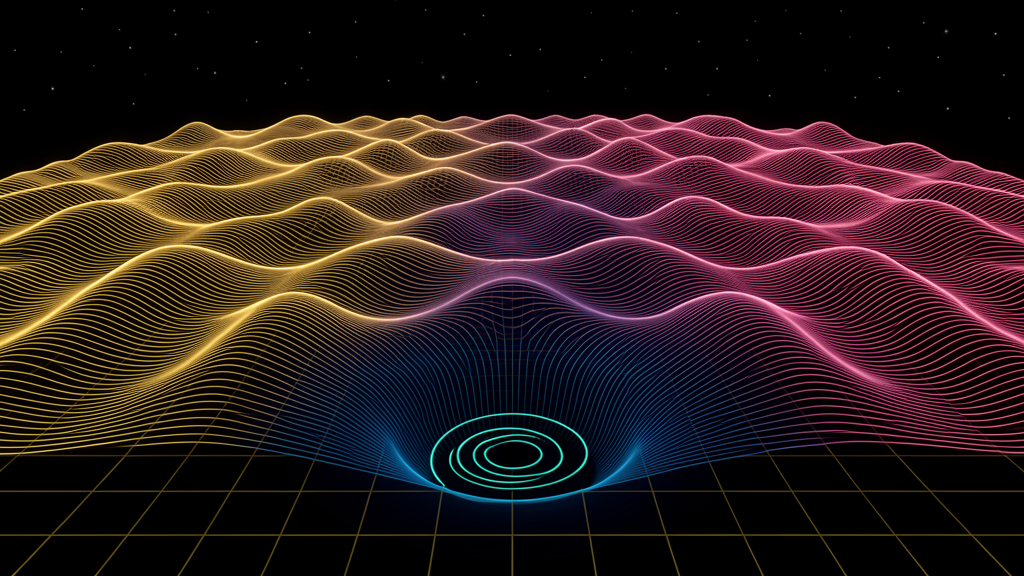
The Waveform Model
A natal chart shows where the planets sit — like tiny particles pinned to a wheel. The waveform model shows the same ten planets as waves that ripple and mix into one field, the way light is both particle and wave. In plain terms: how the field works, why traditional aspects fall right out of the math, what the blue valleys and the whirlpools at their floor really are — and the tests it failed (no, the planets are not beaming waves at us). Ends on where this echoes black holes and the scalar-potential frontier, clearly marked as offered, not proven.
Read the Field Note →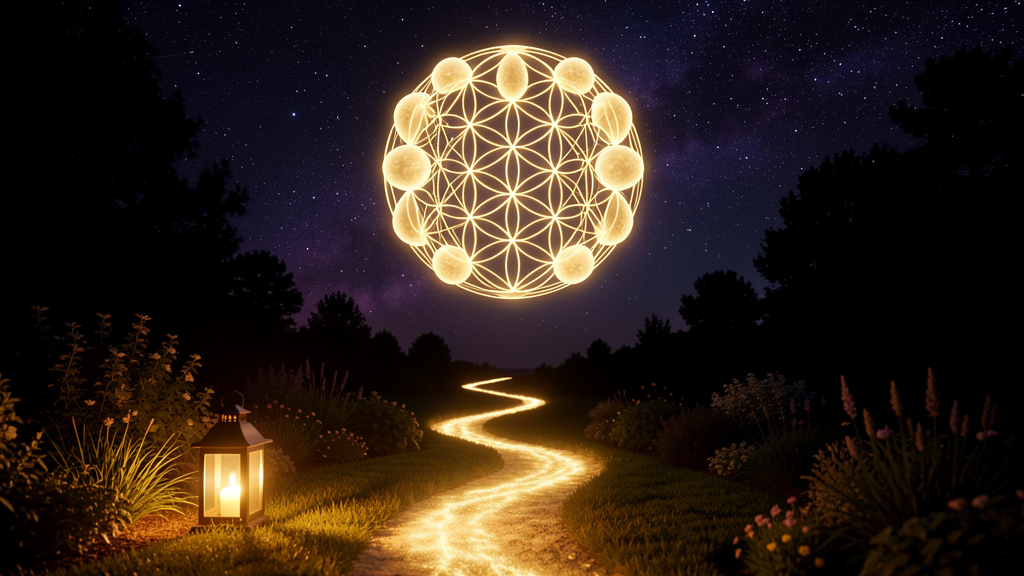
The Long Way Home
For readers who know me from the health world and wonder where the physics came from. This is the bridge: how a wellness founder started as a philosophy student obsessed with what reality is made of, why heal, whole, and holy were one word before we split them, and how a thirty-year-old wager finally became an instrument you can turn with your own hands. The gentlest door into the whole project — no jargon, just the road.
Read the Field Note →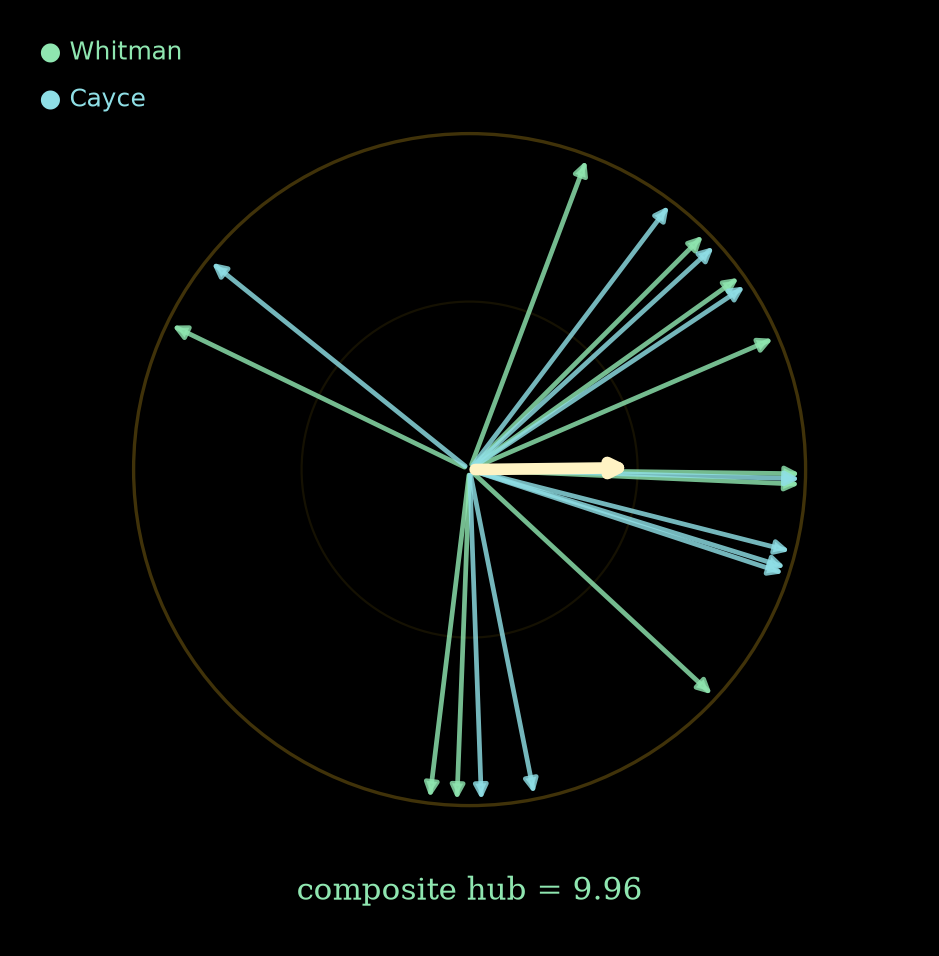
The Copernican Return
Four centuries ago Copernicus moved the Earth and evacuated the observer; Descartes cut the thinking thing from the world. This is the long way home — from Husserl’s scandal (“the Earth does not move”) and Merleau-Ponty’s flesh, to an instrument that renders any birth-moment as a living 3D field. We turn it on two Americans who could not be more different — Walt Whitman, who contained multitudes from inside his own standpoint, and Edgar Cayce, who left his standpoint entirely and spoke from nowhere — and read each as terrain, as waveform, and finally as the field the two make between them. The waterline kept throughout: what is structural, what is refuted, what is offered as resonance.
Read the essay →
Six Times We Went Looking for the Sky in a Person — and Six Times It Wasn’t There
The two newest pre-registered tests hunted for a real link between the shape of the birth sky and human life across 21,166 timed births. An instrument that screams at a planted fake signal — caught at 1132σ — heard pure silence from real people; athletes, the old “Mars effect” heartland, came out least remarkable of all. And the latitude result that almost fooled us: it lit up, until our own pre-registered control traced it to old French geography wearing a costume. Five clean nulls and one confound caught in the act. The catch is the credibility.
Read the Field Note →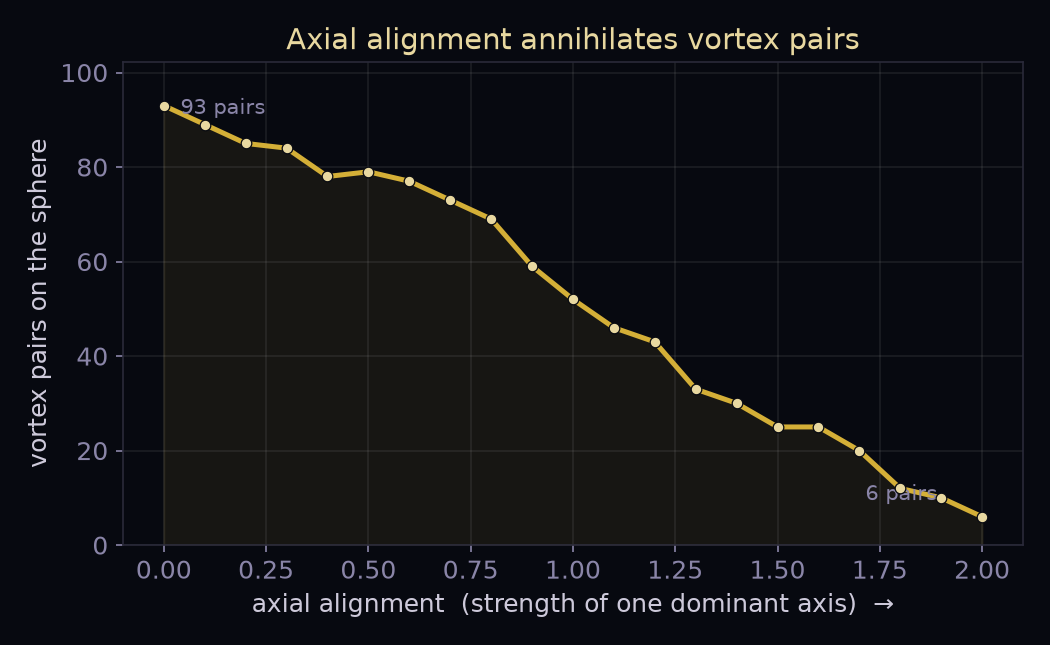
Your Birth Chart Is a Sphere Full of Whirlpools
A plain-language tour of something real we found. Sung as ten overlapping waves on the celestial sphere, a birth field is threaded by tiny whirlpools — and they obey an iron rule: they come in balanced +/− pairs that always sum to zero, the same law that says you can’t comb a hairy ball flat. How many you carry is set by how gathered or how deep your field is; we even watched a pair drift together and annihilate. No math required — and an honest fence around what it does and doesn’t mean.
Read the Field Note →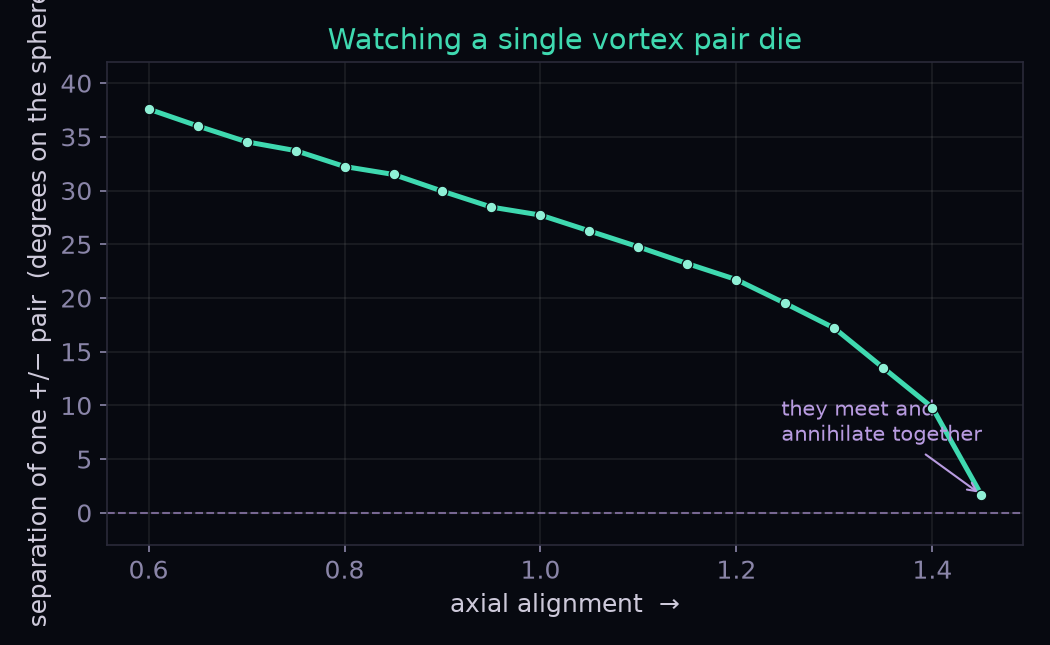
The Paired Vortices of the Birth Field
The rigorous companion. We lift the field from the plane onto the celestial sphere, where the flat vortex is revealed as a filament piercing a slice, and a conservation law appears: the phase singularities of a field on a closed surface must sum to zero. We confirm it numerically (net charge → 0 as the grid refines), identify the two forces that govern the pairs — coherence sets their number, axial alignment annihilates them — and mark, explicitly, the wall we do not breach and the one hypothesis we stake. Four appendices, each with a plain-language twin.
Read the white paper →
Mercury Isn’t Moving Backward. Here’s What Actually Is.
We take the internet’s favorite scapegoat apart down to the geometry. Mercury never reverses — it’s a viewing-angle illusion. We give the tradition its real due (it mapped a subtle three-pass geometry centuries before Kepler), then report something new: a measured vortex that appears in retrograde-heavy skies, which survived both a shuffle-null and the strongest “it’s just a re-description” objection a reviewer could throw. And then we cross from measurement into meaning on purpose — naming one falsifiable claim, with the exact experiment that would prove us wrong.
Read the Field Note →
Mercury Retrograde as Field Geometry
The rigorous companion to the Field Note, written to be read by a curious 8th grader and a skeptical physicist alike. The four-tier honesty membrane (REAL / ARCH / INTERP / HYP), the exact winding definition, the full re-description audit with every number, the pre-registered blind test in locked form, and four appendices with the mathematics. This is where the geometry is proven and the one hypothesis is staked — with the knife that could kill it.
Read the white paper →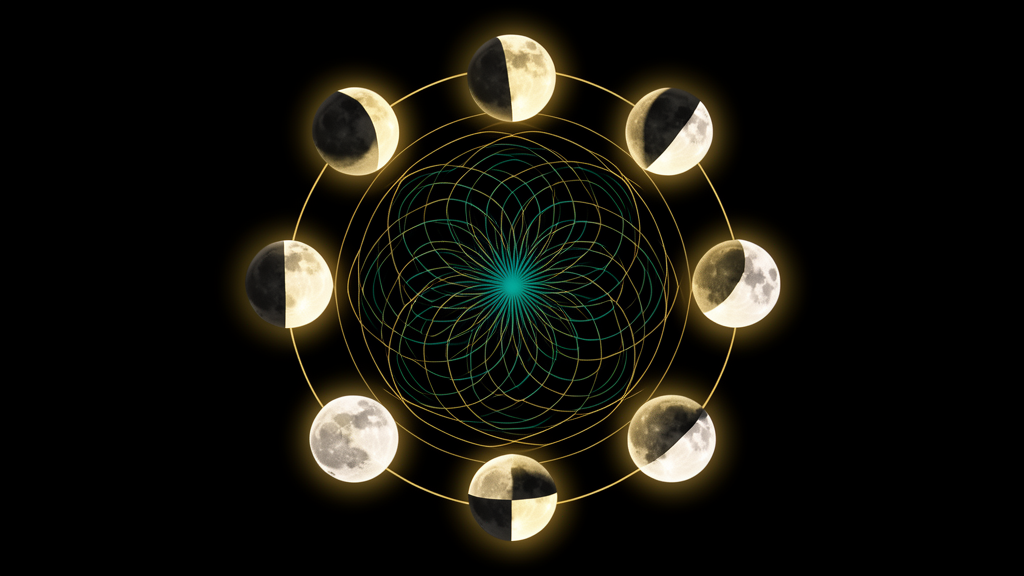
The Signs Don’t Fit. The Phases Do.
We pointed the instrument at ourselves and asked a dangerous question: do our frame-invariant field classifiers secretly re-derive the zodiac signs and nakṣatras? Across thousands of real charts the answer was no — the apparent overlap is an epoch artifact that tracks Neptune at r = 0.98 and dissolves the moment you control for the decade. But the Sun–Earth–Moon phase angles fit cleanly, and they pass every honesty test the signs failed: invariance, epoch-stability, and a retrograde signature written into the field’s own topology.
Read the Field Note →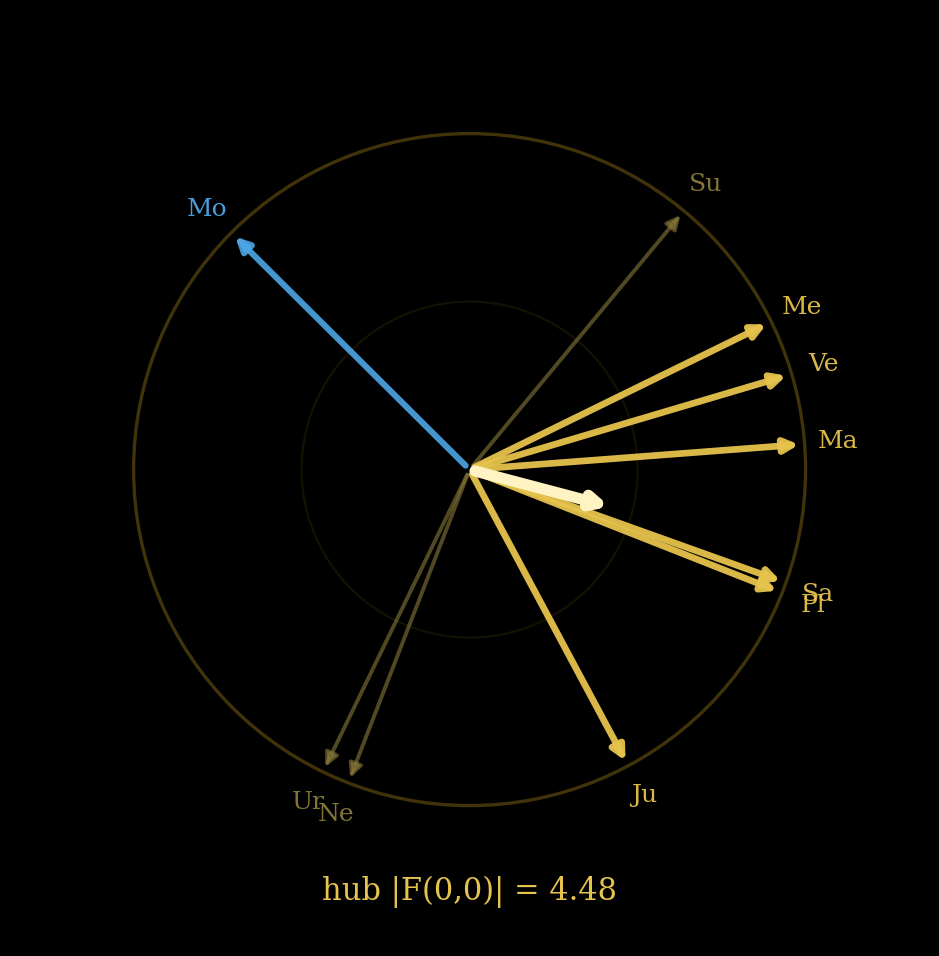
Two Luminaries: The Poet Who Had No Direction, and the Prophet Who Slept
Two charts at opposite corners of the sky’s honesty. Walt Whitman — birth hour lost, yet the reading holds across all twenty-four — is nearly pure chorus: a compass that spins with no heading at all, over a breath near the top of the whole population. All lift, no aim. Edgar Cayce, the Sleeping Prophet, is his exact mirror: a needle locked down a single line over a field that barely stirs. Two instruments — the hub of agreement, the breath of lift — and why one number was never going to be enough.
Read the full essay on Substack →
Jung's White Ant and the Membrane
In 1952 Carl Jung ran the tradition’s own marriage-aspect experiment — and found it non-significant. Each batch threw up a different lunar “hit,” and when he pooled the data they cancelled to chance: the exact failure mode our controls are built to catch. The founder of psychological astrology reached the Scalar Flower’s verdict 74 years before we did.
Read the article →
The Fifth Vertex
Why you can’t see the most real thing in your chart — and why that invisibility is exactly what proves it’s there. The billiard-ball error, the field reframe, and the one invariant that survives every turning: angle. Building on Sungchul Ji’s Three-Layered Reality Hypothesis, welded to our own frame-invariant geometry and to Penrose’s conformal skeleton of spacetime.
Read the article →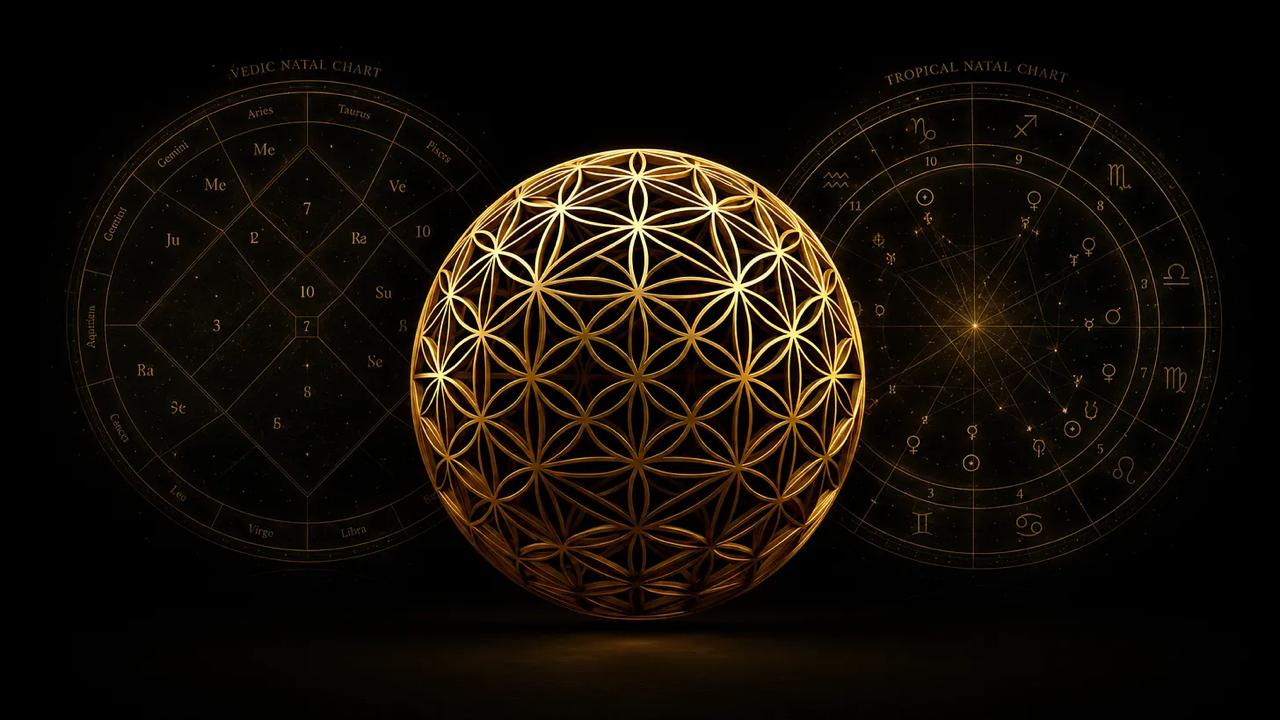
An Astrology That Can Say No to Itself
The launch of Scalar Flower. We aimed our hardest pre-registered test at 21,165 timed births and it lit up at p = 0.003 — the confirmation this tradition has waited on. Then our own confound control collapsed it to p = 0.83. We published the failure first, under our own banner, before a single triumph. The story of the four discoveries that survived, and the one that didn’t.
Read the article →
The Moon Doesn’t Sit. It Breathes.
We pressed hardest on the most important point in our model — the lunar node — expecting it to govern where the Moon sits. Across 8,000 years and 2.9 million samples, the longitude signal came back a flat zero. The story of the pre-registered test that failed, what we found when we looked up instead of around, and why a null became the best thing that happened to us.
Read the article →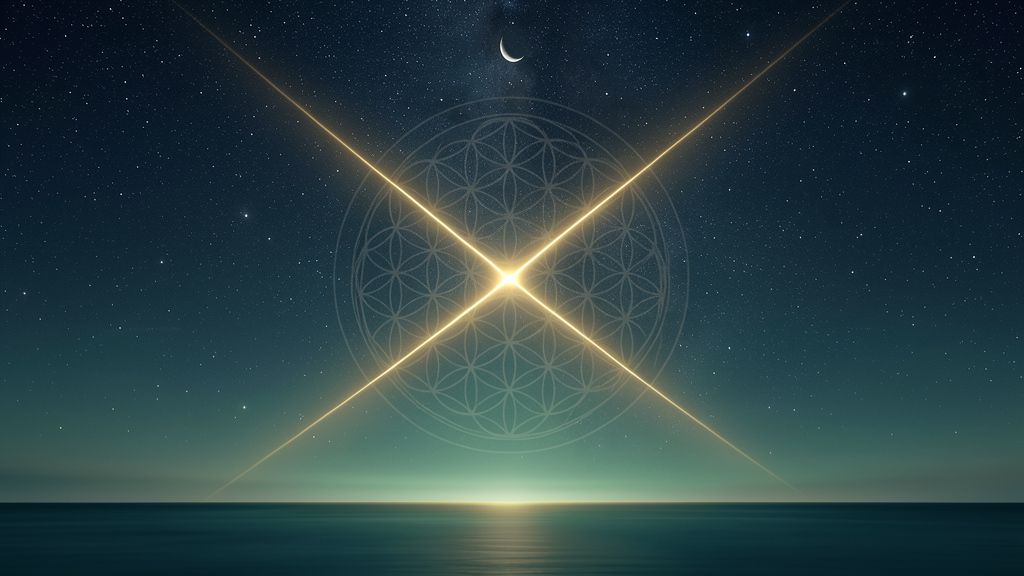
What the Geometry Says About Jyotiṣa
Where the Scalar Flower’s frame-invariant geometry meets Vedic astrology — what it genuinely confirms (the lunar node, the rhythm of the twenty-seven mansions), what it stays silent on, and why it is indifferent to the tropical-versus-sidereal question everyone expects it to settle. Honest about theorem, premise, and craft.
Read the article →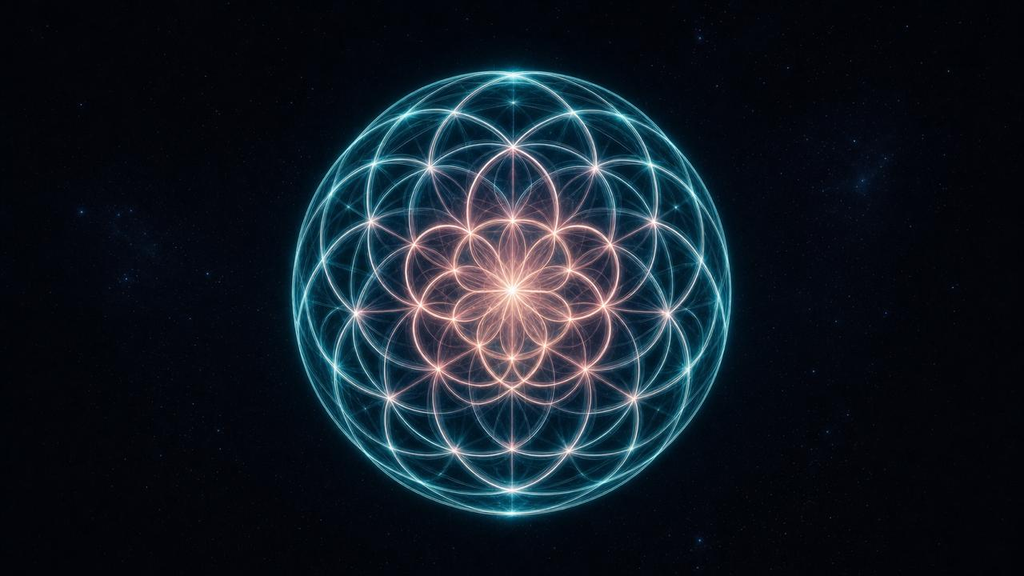
The Flower Opens: Launching the Scalar Flower Instrument
Why we built an astrology that begins by proving the part that doesn’t depend on belief — a frame-invariant wave-field formalism, calibrated on ~290,000 births, honest about what it is and what it refuses to claim. The first reading you can take, and how to explain its value to someone you love.
Read the article →What We Got Wrong So Far
The Scalar Flower promises to report what fails as openly as what holds. Here is what we've gotten wrong — and what we learned from it.
Read the article →Reading a Sacred Bond: The Vesica Between Two Fields
The Sacred Bond reading reveals the vesica — the overlap — between two fields.
Read the article →What a Chart Sounds Like — The Field Listener
Hear your chart as sound — each planet a tone, each relationship a chord.
Read the article →Astrocartography Without the Fatalism
Field-coupled lines as invitation, not destiny.
Read the article →What Secondary Progressions Actually Compute
A day for a year, shown with real numbers.
Read the article →The Vector Equilibrium: What Your Chart Looks Like in 3D
The geometric foundation of the Scalar Flower — the zero-point from which all planetary waves radiate.
Read the article →Mula, the Galactic Center, and the Root of the Sky
The strongest esoteric hook on the site: Mula, the "root" nakshatra ruled by Ketu, points at the Galactic Center.
Read the article →